Religion: Systematic Technologies for Managing Inevitability
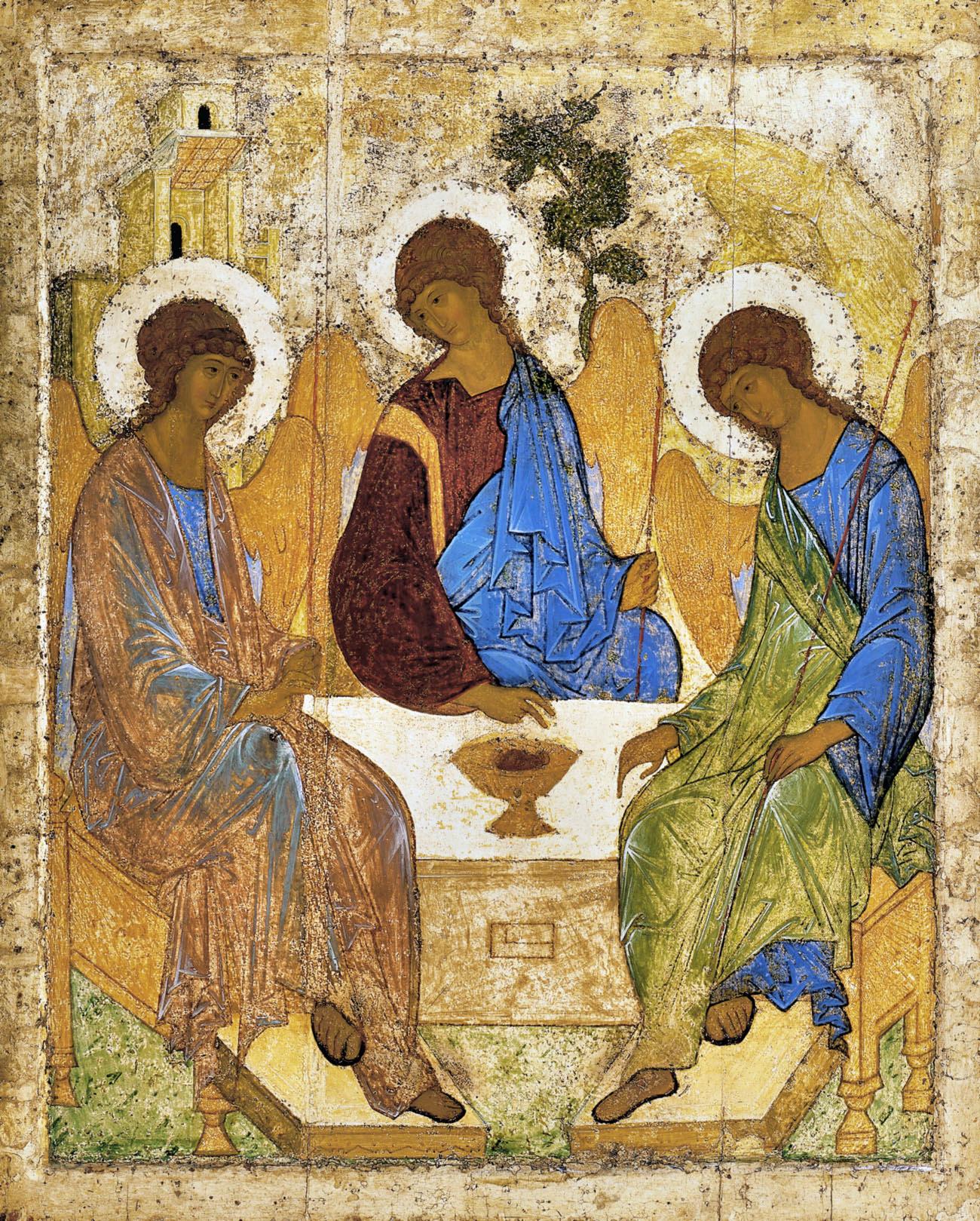
A religion, understood functionally, is a systematic technology for managing the existential burden through:
- Affect interventions (practices that modulate experiential structure)
- Narrative frameworks (stories that contextualize individual existence)
- Community structures (expanded self-models through belonging)
- Mortality management (beliefs about death that reduce threat-signal)
- Ethical guidance (policies for navigating affect space)
Religious Diversity as Affect-Strategy Diversity. Different religious traditions emphasize different affect-management strategies:
- Contemplative traditions (Buddhism, mystical Christianity, Sufism): Target self-model dissolution ()
- Devotional traditions (bhakti, evangelical Christianity): Target high positive valence through relationship with divine
- Legalistic traditions (Orthodox Judaism, traditional Islam): Target stable arousal through structured practice
- Shamanic traditions: Target radical affect-space exploration through altered states
Each tradition operates at a characteristic configuration of the perceptual axes. Devotional traditions cultivate high toward the divine—God as a person with interiority and will—while keeping ascription moderate elsewhere. Contemplative traditions train voluntary modulation of and : raising ascription and coupling the modes (universal aliveness, nondual awareness) and lowering and decoupling them (discernment, detachment from illusion) on demand. Shamanic traditions use pharmacological and ritual gain (high ) to flood the channel and access coupled states otherwise unavailable. Legalistic traditions maintain moderate, stable coupling through rule-governed practice that neither suppresses meaning (low ) nor overwhelms with it (uncontrolled high and ). The religious wars are, among other things, conflicts of axis-strategy: meaning through structured coupling clashing with meaning through dissolution.
Secular Spirituality. "Spiritual but not religious" is selective adoption of religious affect technologies without the full institutional/doctrinal package:
- Meditation without Buddhism
- Awe-cultivation without theism
- Community ritual without shared creed
- Meaning-making without metaphysical commitment
This represents modular affect engineering—selecting interventions based on desired affect outcomes rather than doctrinal coherence.
Religion is deeper than function. The functional description above — religion as a bundle of affect interventions — is accurate but incomplete in a way that matters. For participants, religion is not merely a coping technology; it is an encounter claim: the assertion that the practice puts one into contact with something real that exceeds the practitioner. Whether the claim is true is a different question from whether the functional description is accurate. Both can hold at once: the practice produces measurable affect shifts AND the practitioner experiences them as contact with transcendence. The framework's contribution is not to reduce religion to affect engineering but to identify what religion does structurally — and then to ask what happens when the function persists but the metaphysical depth is removed.
Religion is one of humanity's deepest affect architectures, integrating operations that secular institutions scatter across uncoordinated providers. A mature tradition bundles mortality management (viability-horizon extension through afterlife beliefs, symbolic immortality through communion of saints), synchrony production (congregational worship, pilgrimage, shared calendar), ethical policy-setting (moral code as gradient installation, conscience as internalized gradient), transpersonal identity formation (self-model expansion into the body of Christ, the ummah, the sangha), ritualized state transition (rites of passage as controlled attractor migration — baptism, bar mitzvah, marriage, funeral), and self-model expansion (the practitioner not merely this individual but a node in a pattern that spans centuries). No secular institution has reached this degree of integration. The question is whether integration is possible without the metaphysical commitments that hold the bundle together.
Secular and synthetic successors. Whether or not one shares religious metaphysics, the observation is stark: fandoms, nations, therapeutic subcultures, ideologically saturated platforms, brands, and AI companions are converging toward religion-shaped functions without admitting it. Fandoms provide community, shared narrative, ritualized gathering, identity expansion, synchrony — but without mortality management or ethical obligation, leaving the participant bonded to a pattern that offers belonging without transcendence. National identity provides self-model expansion, viability-horizon extension, ritualized state transition — but a mortality strategy (the nation survives your death) thinner than the theological versions and vulnerable to geopolitical contingency. Therapeutic subcultures provide ethical guidance, community, and a diagnostic framework that functions as secular theology — but without the institutional depth to sustain ritualized practice across generations. Platforms provide identity formation, synchrony (the shared timeline, the viral moment), and community — but with an objective function (engagement maximization) parasitic on the affect states it generates. Each is affect infrastructure performing religion-shaped functions without the self-understanding that it does so — and without the millennia of refinement traditional religions accumulated for managing the consequences.
What is lost when function is inherited without depth? Three things, at minimum. First, obligation: religious community demands sacrifice — tithing, service, observance, the subordination of preference to communal schedule. Secular successors tend to be opt-in, frictionless, exit-friendly, so they cannot build the integration that requires sustained discomfort. The basin is shallow because the traversal is never forced through the difficult regions. Second, transcendence: the practitioner's self-model expansion includes a dimension that exceeds all human institutions — the divine, the dharma, the tao, the absolute. Secular successors expand the self-model into manifestly contingent, imperfect institutions, providing belonging without participation in something eternal. Third, a framework for suffering: religion's deepest affect engineering is not the production of positive valence but the contextualization of suffering — the claim that it is not noise but signal within a larger pattern. Secular successors struggle here, lacking the narrative depth to make suffering interpretable without making it instrumental.
What is gained? Two things. First, voluntarism: the secular participant's commitment is authored, not inherited, which (following the basin analysis above) may generalize more robustly across life transitions even if the basin starts shallower. Second, pluralism: the modular approach lets the practitioner draw on multiple traditions without the exclusivity claims that historically produced religious violence. Whether the gains outweigh the losses is not an empirical question the framework can answer — it depends on the weights in the flourishing score, and those weights are the normative commitment, not the science.