Aesthetics: The Modulation of Affect Through Form
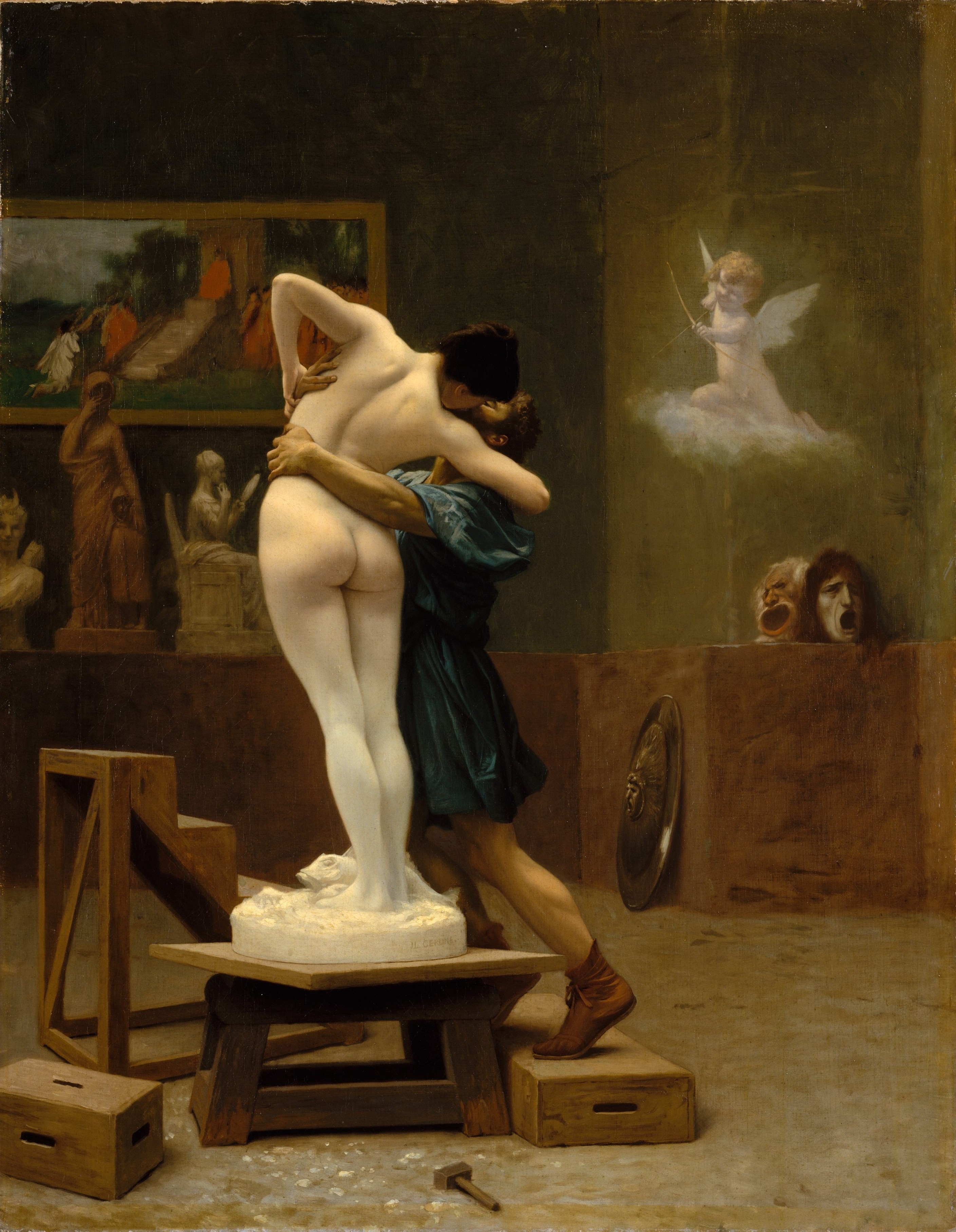
An aesthetic experience is an affect state induced by engagement with form—visual, auditory, linguistic, conceptual—characterized by:
The signature feature is integration without self-focus: the system is highly coupled but attending to structure outside itself.
Within this space, distinct aesthetic modes occupy recognizable regions. Beauty arises when external structure resonates with internal structure:
High mutual information between the form and the self-model’s latent structure produces the characteristic “recognition” quality of beauty—the sense that something outside corresponds to something inside.
Where beauty is resonance, the sublime is perturbation—a temporary disruption of normal self-model boundaries:
Confrontation with vastness (mountains, oceans, cosmic scales) or power (storms, great art) forces rapid expansion of the world model beyond the self-model’s normal scope. The self goes small relative to the newly-expanded frame. Terrifying and liberating at once—a temporary escape from the trap of self-reference.
These experiences do not arrive from nowhere. Art-making is their deliberate externalization—the encoding of internal affect structure into a medium:
The artist encodes their affect geometry into paint, sound, words, or movement. The artwork then carries a signature that can induce corresponding states in others. Art is affect technology: experiential structure transmitted across minds and time. Galleries, concert halls, publishing houses, streaming platforms, radio stations, public murals — the systems that determine which art reaches which audiences — are affect infrastructure, whether or not anyone uses the term.
But this obscures the mechanics. Affect is how the system makes the world actionable—carving a small set of priority gradients into an overwhelming space of possibilities. Music carves them directly, bypassing proposition-land: it transmits this is the slope without spelling out the calculus. The artist does not pour internal geometry into a medium the way water fills a vessel. The medium imposes constraints: meter, rhyme, phonotactics, breath, melodic contour, harmony, genre convention, audience prior. The artist's task is a constrained search—a sweep through the medium's combinatorial possibilities until one encoding preserves the essential invariant while satisfying every constraint the channel demands. The constraints are not obstacles. They are the sieve that proves the signal is real. If a line of verse hits—moves you—while rhyming, scanning, landing on beat, fitting the harmony, the underlying thought was load-bearing enough to survive the squeeze. A thought expressible only one unconstrained way might be an accident. A thought that survives brutal compression into a form with a hundred independent requirements is almost certainly tracking something structural. This is why formal poetry carries more meaning per word than prose, and why the greatest musical phrases feel both surprising and inevitable: the constraints made a narrow channel, and something real made it through.
What is that "something real"? The artwork carries a holonomy specification — a compressed instruction for coupling modes in the listener's representation that were previously uncoupled. A metaphor is the minimum-cost version: it declares "this IS that," coupling a source subbundle (the listener already has rich modes for furnaces, for oceans, for falling) with a target subbundle. The holonomy already held for the source — heat transforms raw material into refined; oceans contain everything while contained by nothing; falling accelerates without force — installs itself as holonomy for the target. The information cost is negligible: a few words. The structural impact is permanent: the modes, once coupled, cannot be uncoupled without losing the insight. This is why the best metaphors feel inevitable rather than clever — they add not information (you already had both subbundles) but topology, coupling two subbundles that were flat with respect to each other, and the recognition is the felt sense of new holonomy clicking into place. A bad metaphor fails when the source's topology does not match the target's actual dynamics: the imported holonomy rotates your modes in directions that do not track reality, and the coupling generates wrong predictions. Formulaic art tickles existing holonomy without installing new topology — zero eigenskeletal delta, no matter how many bits are transmitted.
More precisely, art is coupling technology. It works, in part, by raising the viewer's coupling (Part II)—binding perception, affect, agency-attribution, and narrative into a single curved loop—and, where the work depicts agents, by raising ascription toward what is arranged on canvas or stage. To experience a painting as beautiful rather than as pigment is to let the percept couple to affect (high ) and to grant interiority, intention, life to arranged matter (high ). The craft is arranging a medium so and rise involuntarily in the perceiver. This is why aesthetic experience requires surrender. You cannot experience beauty while keeping your own modes factored apart and the depicted world stripped of interiority. The paint must become more than paint.
Each aesthetic mode has a characteristic axis signature:
- The sublime is a forced gain spike that drives coupling up—scale overwhelms the priors (high ), the modes bind (high ), and the world becomes agentive again (high : the storm rages, the mountain looms).
- Horror triggers uncontrolled ascription: agency detected everywhere, the darkness populated with intention— spikes toward shadows and sounds that warrant none. Horror works because the discipline you normally keep over where interiority is granted is precisely what it strips away.
- Comedy destabilizes ascription briefly—the category violation that produces laughter is a micro-perturbation in which snaps: something dead turns out to be alive or something alive turns out to be mechanical (Bergson's insight, formalized).
- Tragedy holds high and high for an extended period, forcing sustained participatory engagement with characters whose fates approach the viability boundary. The catharsis is the controlled experience of full coupling under narrative containment.
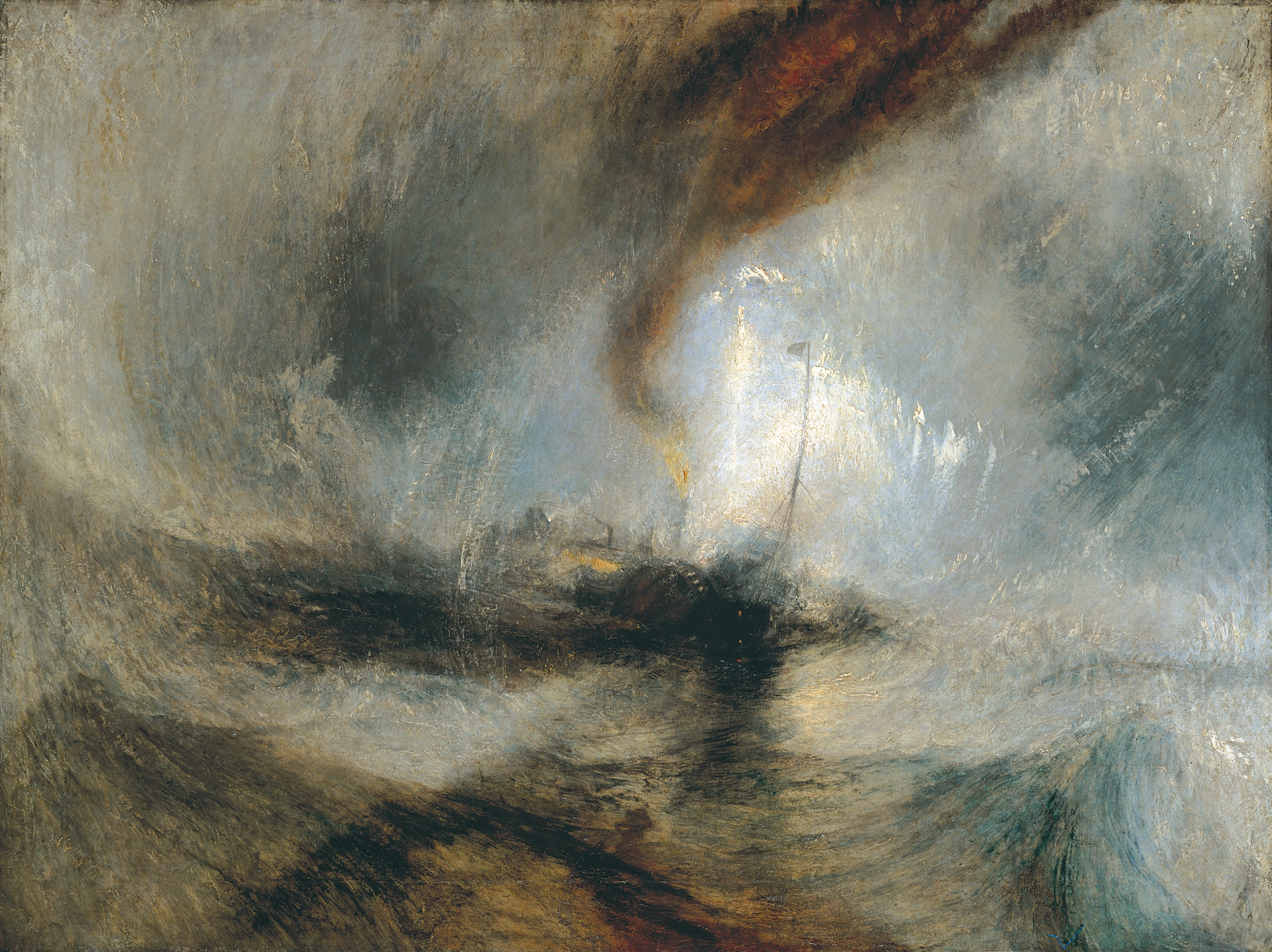

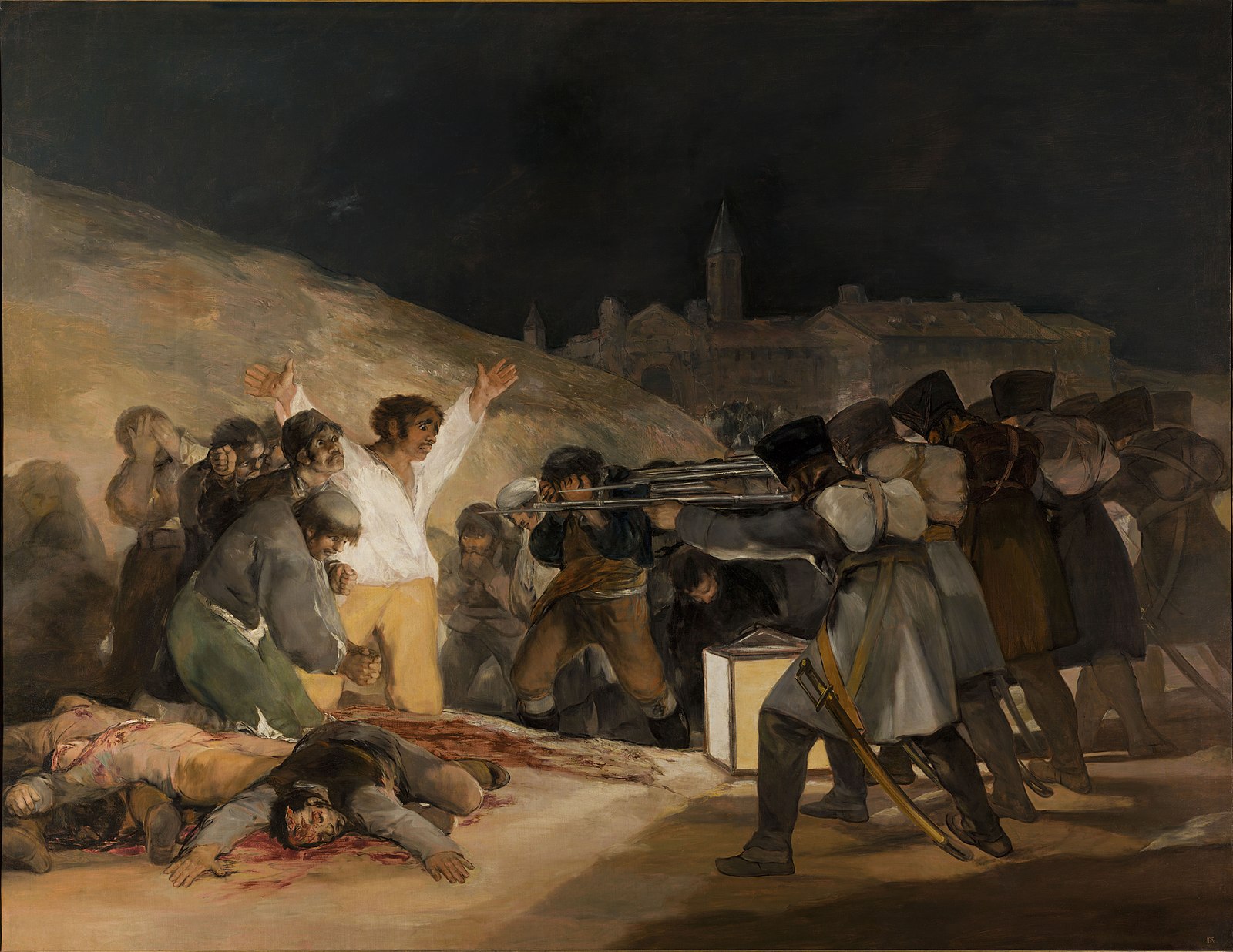
The modern “death of art”—the difficulty of producing genuinely moving work in a hyper-mechanistic culture—is a coupling problem. When population-mean is very low, art must work harder to induce the binding aesthetic experience requires. Irony, which keeps the modes factored apart (low ) while gesturing toward what coupling would reveal, becomes dominant—not because artists prefer it, but because sincerity requires a rise in the audience has been trained to resist.
Music is, in effect, a remote control for attention allocation. Each aesthetic mode redistributes the observer’s measurement distribution across possibility space. The sublime overwhelms with scale, forcing attention onto vast branches normally suppressed. Horror spreads attention to threat-branches normally dampened when ascription is held in check. Flow-inducing music narrows the measurement window to the immediate present-state manifold. Each form selects which trajectories receive probability mass in the observer’s representation—and, if the trajectory-selection thesis holds, which trajectories the observer actually follows.
Affect Signatures of Aesthetic Forms
Different aesthetic forms have characteristic affect signatures:
| Form | Constitutive Structure |
|---|---|
| Tragedy | , , , (suffering structure made beautiful through integration) |
| Comedy | , , (release, expansion, lightness) |
| Lyric poetry | , , (self-reflection made resonant) |
| Abstract art | , , (pure structure, self-forgetting) |
| Horror | , , , (fear structure in controlled context) |
AffectSpace: Immersive Validation Platform
A software system to validate the affect framework by comparing predicted structural signatures with self-report:
Architecture:
- Stimulus Library: Curated collection of affect-inducing stimuli
- Real-time Self-Report Interface
- Physiological Integration (optional)
- Prediction Engine
Validation Metrics:
- Per-dimension correlation for predicted dimensions
- Clustering accuracy: do induced affects cluster by their predicted structure?
- Dimensionality validation: does each affect require its predicted number of dimensions?
If predicted dimensions do not predict self-report better than others, or if clustering requires different dimensions than predicted, the motif characterizations are wrong.
Genre and Design as Affect Technologies
Music is among the most powerful affect technologies humans have. Genres are accumulated cultural wisdom about how to induce specific experiential states. Two contrasting examples mark the range.
Example (The Blues). Emerged from African American experience in the post-Emancipation South—a form acknowledging suffering while keeping dignity. The 12-bar structure gives predictability within which to express unpredictable feeling; blue notes create tension without resolution, mirroring persistent difficulty; call-and-response holds both individual and collective dimensions of suffering.
The blues does not eliminate suffering but integrates it. remains high (the suffering is owned) but also increases (the suffering connects to others’). The result is suffering that has been witnessed, named, and placed in context.
Example (Baroque/Maximalism). Counter-Reformation Catholicism, needing to assert power and overwhelm Protestant austerity, produced design emphasizing abundance and transcendence. Excessive ornamentation, gold, dramatic lighting, trompe l'oeil, and scale that dwarfs the individual.
Overwhelm through abundance. The high effective rank exceeds cognitive capacity, forcing surrender of normal parsing. With low self-salience from architectural scale, the result approximates the sublime—self-dissolution through excess rather than emptiness.
Taste and the Listener's Geometry
“Profound” names something specific. Not skill, not production: the claim is that this thing reached into the geometry of the self-model and moved it, cleanly, without wasting bandwidth, and the move felt inevitable once it happened. The move is the value. Everything else — rhyme, tempo, harmony, vocal tone, mixing — is channel coding that lets the move survive contact with constraints. Taste is learned sensitivity to particular classes of such moves — a gradient estimator refined by experience. Some nervous systems are tuned to social truth (betrayal, loyalty, status), others to spiritual invariants (awe, surrender, cosmic pattern), others to erotic geometry (wanting, withholding, possession), others to technical beauty (surprise under constraint), others to raw affect naming — the moment a song says that, that is what was being felt and the pre-linguistic mess acquires a handle. Not arbitrary preferences. They are what the system has learned to treat as high-value updates to the parts of the model under optimization. Taste changes when the system changes: the coordinate system shifts, the gates open or close, the frontier under optimization moves.
The value of art is not reducible to information gain. The system is not a detached scientist; it is an organism with boundary conditions, social exposure, erotic drives, moral machinery, and a narrative identity that must stay continuous across time. The displacement that matters lives in whatever feature space the nervous system uses to decide what matters — sometimes epistemic (a sharper model of power), sometimes permission (a reweighting of what is allowed to be wanted), sometimes coordination (a signal that finds its people), sometimes a beautiful lie whose dynamics rhyme with the organism’s own and whose rhyme is the information. “Profound” is the word for when the compressed thing is both world-true and self-true enough to reorganize the system. What is appreciated is compression gain the listener endorses: a shorter program for something previously carried as a huge mess, and it compiles against lived data — fewer degrees of freedom, more coherence, not because the world got smaller but because the map got better. The hardest case is when the song compresses something pre-linguistic. No new sentence is learned. A new latent variable arrives: oh — THAT is what was being felt. A structural refactor of the self-model. That is why the song gets replayed forty times. Formulaic music fails here precisely: it satisfies constraints but transmits near-zero state change — a perfectly formed envelope with no letter inside. It tickles priors without updating them. The detection system is not fooled by surface complexity. Only by real invariants forced through real constraints.
Childhood bandwidth and the compression of growing up. Childhood specialness—the vivid, oversaturated quality of early experience—is partly novelty, partly the ego's default assumption that the universe is about you, and partly what the world looks like when the codecs are untrained. The compression has not stabilized. The partitions between "important" and "background" are still plastic. The world is higher bandwidth because you have not compressed it yet. Growing up is compression—and what survives compression determines what the system is. If the scheme is too crude—throws away the wrong dimensions, collapses desire into shame, flattens awe into cynicism—then life feels as though it lost information, when really your model lost degrees of freedom. Profound art is one of the few adult technologies that can temporarily reopen those degrees of freedom without breaking you: controlled expansion, then clean recompression, the new state denser in meaning than the old. And when it really hits, you feel the self-model doing what it always wanted: take the mess, find the invariant, become lighter without becoming smaller.
This is eigenskeleton formation. The infant's representation has high effective rank but flat skeleton — many modes active, no coupling between them. The world is high bandwidth because the codecs are untrained: every mode varies independently, so nothing means anything beyond itself. Growing up crystallizes the skeleton: modes couple through repeated experience, holonomy develops along the loops life forces you through, some eigenspaces merge while others are pruned. What survives is not an arbitrary subset but the modes whose coupling carried predictive value — the skeleton hardens around the invariants the environment rewarded. Crude compression prunes modes as if independent, discarding low-individual-variance ones without checking whether their coupling carried signal. This is how desire collapses into shame, awe into cynicism — the connective tissue cut because it looked like noise from the wrong angle. Profound art reintroduces curvature: it activates dormant eigenspaces and shows they couple to existing modes in ways the hardened skeleton had foreclosed. The reorganization the listener feels is a local eigenskeletal restructuring — new holonomy where there was none.
More than analogy? It would be if the system that detects whether a musical dissonance resolves is the same one that detects whether two people's viability manifolds are aligned. "Something is off about this interaction" and "something is off about this chord" might activate the same integration-assessment machinery. If so, social disgust and aesthetic disgust are one mechanism applied to different inputs. The foundation: aesthetics as the modulation of affect through structure, and relationships as structures. Whether this is deep identity or surface similarity is empirical—neuroimaging comparing aesthetic and social-evaluation responses could begin to answer it.
The political economy of palette expansion. The distinction between palette expansion and palette capture is the aesthetic axis that matters most for civilizational health, and it maps onto the distinction between emancipatory and extractive affect infrastructure. Expansion installs new basis vectors in the audience's representational space — afterward they can represent states they previously could not, perceive distinctions they could not draw, name affects they could not name. Capture identifies existing basis vectors and produces content that maximally activates them — the current palette read, modeled, fed back in maximally resonant form. Industrial content systems are structurally biased toward capture because capture is measurable (engagement metrics) while expansion is not (you cannot measure what the audience could not represent before the work). The asymmetry: extraction has a gradient, expansion does not — and any optimization process follows the gradient.
Generative systems that can search the space of forms for maximal effect-geometry displacement change the calculus. When a system can model the audience's palette, generate candidate artifacts, evaluate expected displacement, and iterate, maximally resonant content becomes an engineering problem, not an artistic one. The result is not bad content in the crude sense. It is content that is precisely, almost eerily effective — landing with a precision human artists achieve only rarely. The question is whether the precision serves the audience or captures it. If the system optimizes for immediate displacement under the current palette, it produces eigen-art: the principal component of shared human priors, perfectly engineered to activate existing coordinates, incapable of installing new ones. The industrial version of beauty. The audience feels moved without being changed.
Art that merely lands versus art that changes the space in which later things can land — that is capture versus expansion. A song that perfectly satisfies your current emotional coordinate, naming exactly what you feel in a form that resonates with your existing tolerances, is capture. A song that makes you feel something you have never felt before, installing a coordinate you did not have so that afterward you can recognize that feeling in life, is expansion. Capture is immediately gratifying and ultimately entropic: it reinforces the palette without extending it, and repeated capture without expansion breeds aesthetic stagnation — all new content vaguely familiar, nothing surprising anymore. Expansion is initially uncomfortable — the decoder has not learned the new coordinate, so the work presents as noise or difficulty — and ultimately generative: the palette grows, the space of recognizable beauty widens. Civilizational art history is a sequence of expansions: each movement that changed what beauty could mean was first experienced as ugliness or incoherence by audiences whose palettes had not yet grown to contain it.
When does personalization deepen taste, and when does it imprison the subject in a custom-fitted cage of legible beauty? It depends on whether the system's objective function includes palette expansion or only palette resonance. A system serving content that maximally resonates builds a cell whose walls are the user's own aesthetic tolerances — comfortable, familiar, progressively narrower as it learns the palette more precisely. A system serving content at the expanding edge — maximum divergence that still lands, the ridge between noise and revelation — builds a curriculum. The first treats the palette as fixed and serves it; the second treats it as a starting point and extends it. The technical difference is small: a term in the objective function that rewards palette growth. The experiential difference is a comfortable prison versus a challenging education. As personalization becomes the dominant affect infrastructure for aesthetic experience — more people meeting more art through algorithmic feeds than through galleries, bookstores, or friends — which objective function governs the curation becomes a civilizational question about the trajectory of human aesthetic capacity.