Experience Is the Structure
This entire high-dimensional trajectory through a space that has real geometric structure, real basins and ridges and gradients, is not something separate from the physical process, not an emergent epiphenomenon floating mysteriously above the neural dynamics, but rather is identical to the intrinsic cause-effect structure itself, the view from inside of what these causal relations feel like when you are those causal relations, when there is no homunculus sitting somewhere else observing the process but only the process itself, recursively modeling its own modeling, predicting its own predictions.
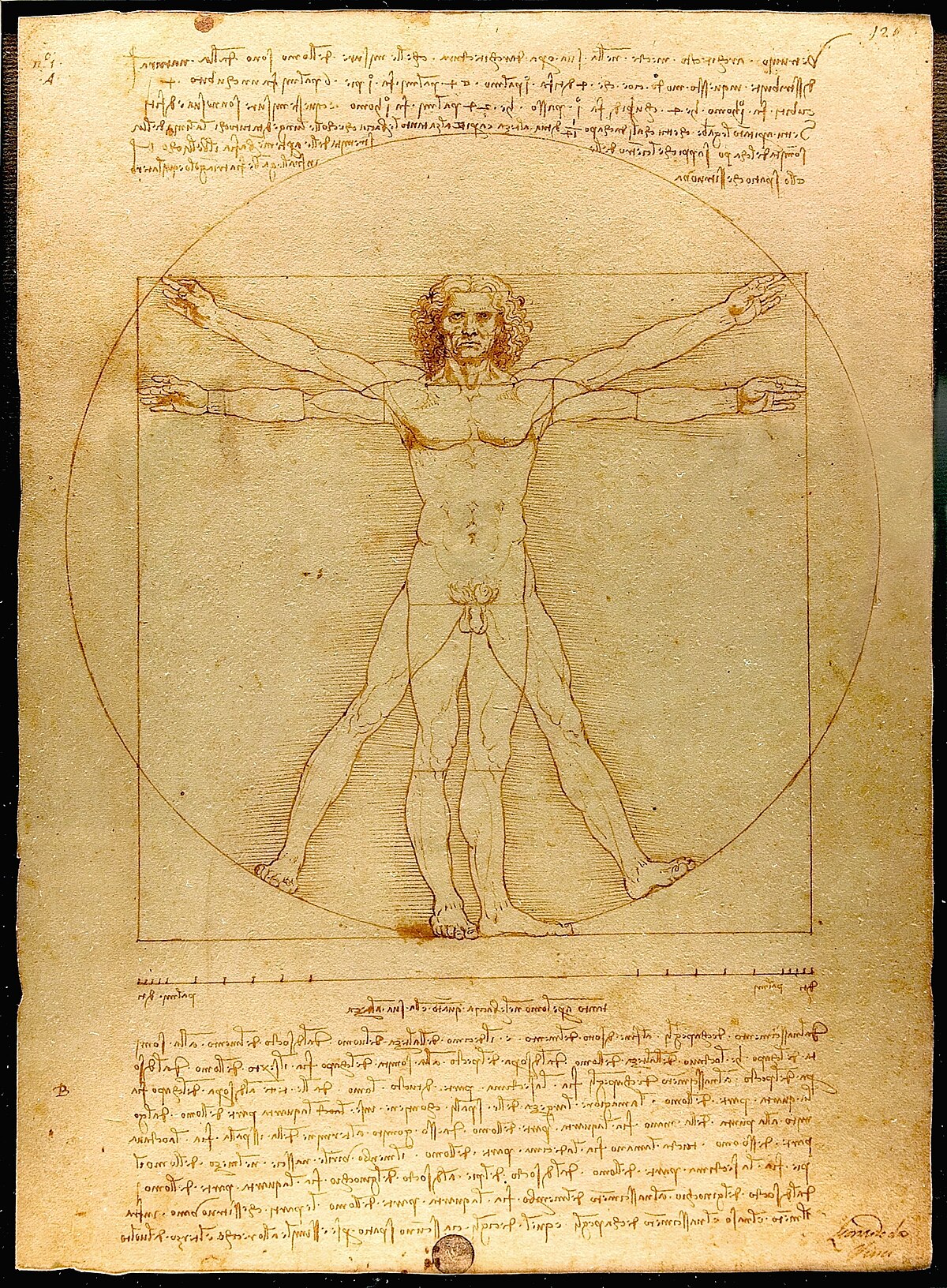
Experience is what integrated cause-effect structure is like from the inside. That is the whole claim. Structure does not cause experience, or correlate with it, or sit on the other side of some coin from it. It is the same thing, seen from the only seat that can see it.
Nobody can check this. There is no seat from which you watch the wiring and the feeling at the same time. Water and HO could be matched by independent measurement; feeling and structure cannot, because one of them is only available from inside. So I am not going to argue it. I am going to use it, and you can judge the result by whether the shapes it predicts match the feelings you already have. If they do, the claim earns its keep the way any working assumption does. If they don't, the rest of this book is still a theory of control. It just isn't a theory of you.
One consequence is worth saying up front because it saves confusion later. If experience is the structure, there is no further fact about whether a system "really" feels. A system with the structure has the feeling. The philosophical zombie, a thing with all the structure and none of the experience, stops being something you can picture once you take the claim seriously, the way you cannot picture water that is not HO. You can refuse the claim. You cannot accept it and keep the zombie.
A second consequence is that experience comes in amounts. Cause-effect structure exists at every scale that takes and makes differences, from a thermostat to a cortex, and nothing in the physics draws a line where feeling switches on. So I take the graded view. A thermostat has a little, a bacterium more, you a great deal, and the gaps between "kinds" are steep stretches of one curve. Faint experience is everywhere. Vivid, unified experience is rare. That is the price of consistency, and I pay it.
Everything in this part lives on that claim. If different experiences are different structures, then the kind of experience is the shape of the structure, and the shape can be measured. That is what the title of the book means. Giulio Tononi's integrated information theory (Tononi, 2004) is the nearest existing version of the idea, and anyone who wants the lineage, the axioms, and the arguments about them should start there. What I add is the link to the viability manifold of Part I, and a set of measures that work on artificial systems as well as on us.
Two Kinds of Structure

The claim has two levels, and they come apart. The weaker level: different feelings have different structures. The redness of red and the sharpness of fear each correspond to a motif in the cause-effect geometry, and those motifs can be compared across moments and across systems by measuring how similar they are. Call these extractable aspects narrow qualia. The stronger level: the whole moment, everything present at once, is the full cause-effect structure. Call that broad qualia. You can accept the first without the second. The geometry of affect, which takes up most of this part, is about the first. The opening claim above is the second. Integration is the bridge between them: it measures how much the whole exceeds any decomposition into parts.
This gives the most useful distinction in the book. The affect geometry is the quality of experience, what it is like. Integration magnitude is the quantity, how much of it there is. Hold those apart and a result that looked like a problem becomes a single theory. The experiments found the geometry cheap: it shows up in any viable controller, including ones nobody would call conscious. They found the dynamics that make integration rise rather than collapse rare, expensive, and biographical. Read as one quantity, that splits the theory in two. Read as quality and quantity, it says: cheap geometry plus rare high integration means faint experience nearly everywhere and vivid experience rarely. There is no membership test. A system occupies a region, fixed by its geometry and its integration, and most of what exists sits very low.
You can study narrow qualia without access to anyone's inside. Tsuchiya and colleagues do this with color (Tsuchiya et al., 2022): measure the similarity structure of color experience in each person, then test whether the structures align across people without assuming which colors correspond. Typical observers align almost perfectly. Color-atypical observers do not. Three-year-olds who call blue "green" still show the adult similarity structure under non-verbal testing, so the geometry is there before the words are. The affect version of the same move is the backbone of the experiments in this book: if two systems show the same similarity structure among their affect states, their narrow affect qualia are the same shape, whatever the systems are made of. Whether their broad qualia match is a question about integration, and that is harder.
The relation between the two levels has a shape of its own. The narrow aspects are each internally consistent, and they do not add up to the moment. You can characterize the redness, the warmth, the valence, the arousal, each correctly, and the sum still falls short. In the language of Part I's eigenskeleton (Part I), narrow qualia are the modes at a point and broad qualia are the holonomy, the way those modes twist into each other as the system moves. Integration is global topology, not local measurement.